What’s A Pinot Gris all about

One of my all time favorite wine makers from “Down Under”,  Rod Easthope, makes killer wines and one of his best is his latest Pinot Gris.  He recently posted to a forum I follow a great discussion of what it takes to make a great Pinot Gris, so with his permission I am reposting it here for the benefit of my readers.  I hope you all enjoy it and learn as much from it as I did.

Pinot Gris’dilocks

Geneticists can’t separate Pinot Noir from Pinot Gris. It maybe just one gene, or the expression of that gene that distinguishes the two. Despite this, the wines produced from each are a world apart. Pinot Noir produces the most expensive red wine in the world (Domaine de la Romanee Conti) and there is more written about Pinot Noir than any other grape. Pinot Gris, on the other hand, is virtually forgotten by wine commentators. Consumers also have low expectations of Pinot Gris. So why is it so popular? Why is it now the third most planted white variety in New Zealand? Why are swathes of innocuous Pinot Grigio guzzled all over the world with little consciousness of its quality?

A non-wine industry friend recently brought a bottle of Pinot Gris to our house and I asked her why she chose a Pinot Gris. She responded “I just like to say Pinot Gris”. This may sound silly, but it is actually quite revealing. Wine is an intimidating product and while we wine aficionados like to make wine the centre of attention – most consumers only need wine to play a supporting role in their culinary and social life. Many modern wines from more assertive grape varieties don’t do this job well – they are wines that demand to be the centre of attention. Pinot Gris is more than happy to play second fiddle. Well-made it is delicate, lightly aromatic, and deftly sweet and dry at the same time. This is why it is so versatile with a range of food and it is also why you can reach for the bottle and it is surprisingly empty – consumed without a thought.

But what is “well-made”? Pinot Gris left unchecked in the vineyard will produce large crops of semi ripe grapes with little flavour or extract. Many winemakers then make up for this by leaving excess residual sugar. These versions are bland flat lemonade wines. Or, the grapes are picked early, fermented dry to make those lean Grigio styles. However, if we acknowledge Pinot Gris’ noble parentage, then we can assume that it will respond to vine husbandry normally reserved for more “noble” cultivars. Suddenly we have extract and flavour. Yet the wine will still be quite shy and subtle, and if the palate balance is not bang on then those attributes can be smothered. And here is the crux of the goldilocks effect; not too sweet and not too dry. It has to be just right. Nail this down and quality Pinot Gris will sing. Elusive florals (notably rose and jasmine), delicate fruits (nashi pear, gala apple), dusting of spice (cinnamon) and a cool fruit palate. Sounds pretty good to me.

Cheers

Rod Easthope


One of the things I like so much about Rod, besides his wine, is his willingness to share his knowledge of Wine and Wine making in a way that makes sense to lay people.  This was another example of just that.  If you have comments just post away and I’ll make sure that they get back to Rod. Include an e-mail address if you like and I wouldn’t be surprised if you heard back from him directly.

Posted in Craft Wines, Down Under, Naked Wines, Pinot Gris, Uncategorized, Wine, Wine Making, Winemakers | Tagged , , , , , , , , , | 4 Comments

I Only Like Sweet Wines, Why?

I maintain a strong on-line presence in a number of  on-line wine related forums and I can’t tell you how many times I get asked this question.  Sadly there is no really simple answers that fill all palates. Actually the concept of tasting sour, bitter or sweet starts with the taste receptors in an individuals mouth.  Have you ever wondered why some people love Broccoli and others just hate it?  It like wine is all a product of how your mouth perceives what you eat and drink.  To a degree we have some control over the end result by what we put in our mouths and how we decide to treat the receptor sensation.  Wine is a great example of how this all evolves.

Wine lovers all started with no sense of what wine tasted like.  If, like the boomers you cut your teeth (figuratively) on Boones Farm, Mogen David and Annie Green Spring (now the anathema of the wine world) you probably graduated to some combination of Carlo Rossi, Gallo, and Mondavi jug wines and then in the 1970 and 80 to some more specific labels. The reality was as much social function as it was a taste function.  It was cool to have a wine glass in your hand at parties; it added to your level of perceived sophistication and even if you didn’t like the taste of a wine at first you sipped it.  After a while you began to tolerate it more and pretty soon you convinced yourself that you actually liked it.  In the wine industry this is known as palate development and they hope that you will soon be able to distinguish between really good (translated expensive) well vinted and aged wines and the productions stuff.  I posted on this subject about a year ago as I tried to distinguish the “craft wine” industry where quality and price had no correlation, from the big houses where price and quality ran on parallel tracks.  I have digressed.

Some people have a palate that recognizes sweet as very good (pleasing) and bitter or sour as bad (unpleasant) If you are one of them, It is okay and real wine aficionados will not think the less of you.  If you want to be “into” wine there are plenty of sweet varieties, Rieslings, Gwertztrameiners, Ports, Sauternes, Moscatos, to name a few, that will give you plenty of opportunity to develop your palate the way you want.  On the other hand if you are adventurous, I challenge you to explore the distinction between “Sweet” and “Fruity”.  Sweet wines can be fruity but will remain sweetish on the, lips, tongue and down the throat while a Fruity dryer wines will morph from the lips to the back of the throat.  It will give a sweet (fruit forward) sensation on the tip of the tongue, show more acid (sourness) on the sides of the tongue and become more tannic (dryness) as it moves to the back of the throat.

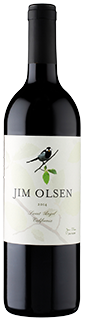
In general terms more white wines are sweeter than you find in the Reds, unless a winemaker chooses to force the sweetness in the vinting process (most don’t).  On of my favorites, Jim Olsen, a faculty member at UC Davis makes a nice sweet red blend called Sweet Angel

Sweet Angel

which he especially designed for NakedWines.com angel who like sweeter wines and wanted something red.  The good new: he made, the bad news you can only get it from Naked Wines and there is a waiting list to be come and Angel (member of Naked Wines).

The real point to this post: don’t let the wine industry define you in any way shape or form, you define yourself in the context of the industry and the availability of existing wines that fit your likes and dislikes.  If you are a sweet wine drinker don’t afraid to try new wines and don’t make a decision on what your palate says about a wine until you’ve tasted it over several days especially reds.  Yes you read this correctly; modern wines get vinted to be consumed differently than older ones with more age on them.  Modern winemaking techniques allow for them to be consumed and enjoyed without being aged for a long time. That said younger wines are not hurt by getting a little air, in fact any red wine with a vintage date of 2012 or younger, should probably be aerated or decanted for a while before you try it.  The impact of this and tasting over several days is to see how the wine develops over time.  The injection of oxygen into the bottle (simply opening and re capping after tasting a bit) gives it the essence of aging.  To a degree, you can tell what a wine will be like in a year, two years and even longer.   As always I love feed back so let me know if this was helpful or not and how it can be improved so it gets closer to your interests and learning style.

Posted in Craft Wines, Hodgpodge, Naked Wines, Production Wine, Varietals, Wine Buying, Wine Tasting, Wines, Words | Tagged , , , , , , , | Leave a comment

Why Can’t I get the Wine I like Where I live?

Wine is complicated and believe it or not still hostage, to a degree in certain states, to Prohibition era legislation.  The whole process gets further complicated by the messy relationship between State and Federal laws about import, export and interstate commerce.  Believe it or not there is actually an organization that works to make sense of all this called Free the Grape.  Their site is wonderful and contains a lot of information about the laws in various states, variations in state laws and what needs to be done to get fair uniformity across the nation.

I live in Montana and we had the worst laws, on direct shipment of wine, until a few years ago when we enacted a “connoisseurs” license statute that allowed a person to purchase ($50.00) a license to purchase specific beers  and wines, directly from out of state producers and distributors, when not otherwise available in the state.  In short we agreed to make sure that the state got it’s taxes on the wines we bought in exchange for getting better selection.  Good idea or Disaster?  It was clearly a disaster as it created a bureaucratic nightmare for both the state and the license holder.  This process lasted one legislative cycle and then (as to wine) got repealed by a law that allowed  for “Wineries” to directly ship up to 18 cases of their own product to any individual Montana resident each year.  This created a vast improvement over the prior scheme, but wait it didn’t go far enough.

For some reason (restraint of trade I’m sure) Montana fears opening this opportunity up beyond wineries and their own products.  I am told by persons within the Department of Revenue Liquor Division (MDRLD) that they want to keep out the big national distributors (e.g. Southern Wine and Spirits , (SWS)) from taking over the industry (and hard liquor monopoly) in Montana.  Personally I find this logic curious as SWS own web-site lists a link to it’s Montana distribution network .  What’s the big deal, isn’t 18 cases of wine enough?  Certainly for me it is, but the larger issue is not how many cases I can get from a winery each year but rather getting greater variety and wines produced outside the US. According to the MDRLD the current law only allows  wine  produced (bottled) in a US winery to qualify for direct shipment.  I would like to see this changed and I and others in Montana are working to revise our laws to provide for a free and open marketplace of wine regardless of its origin.

Some may wonder why they should care about Montana’s odd wine import laws, and unless you also happen to live in Montana you shouldn’t.  The sad fact is , those living in other places have it far worse than I do.  Several states don’t allow direct shipment at all, others, require it to be shipped though local distributors and still others  only allow a certain gross limit (entire state quota) out of individual wineries.  I have friends, in Michigan (which allows direct imports) for example, who have to order their wine before late January in order to get wine from some really popular wineries before the winery hits it quota.  Why do we even have these archaic state laws? If the wine is shipped across state lines, it is in “Interstate Commerce” and clearly could/should be subject to Federal Law (which it is).  If the state taxes get paid one would think that  that a free and open market would be good for business overall.

The point of all this is my plea to get involved in your state and do your part to get the laws changed. Free the Grape has, free for the using, “draft” letters to legislators.  They will even e-mail them for you.  So make your voice heard and strike a blow for liberty, send a letter to your legislators and then follow up to make sure that they know you’re serious.

I’d love to hear what you think on this subject — Let the conversation begin.


Posted in Craft Wines, Life Balance, Production Wine, Uncategorized, Varietals, Wine Tasting, Wines, Words | Tagged , , , , , | 6 Comments

It’s a New Year and a New Me (Sort Of)

It’s been a while since I posted to Poor Robert’s (Wine) Almanac and it hasn’t been with out reason.  I spent a good part of last year preparing to retire from a company I helped found over twenty-seven years ago.  Those who have not gone through a leadership transition process in a business have no idea how much work it takes to do it right.  My personality doesn’t let me do anything half way and retiring was not exception.  I spent a lot of time staying out of my successor’s way so I could see where I could help and where I was not needed.  I made sure that all processes were documented so that he could use what was there and change what he wanted, and mostly I cleaned out the office, literally and figuratively to give him a clean place to make the company his own.  Okay so nothing is ever perfect, but in this case I think I came really close. This was the most seamless transition in history according to my board of Directors. Effective January 1, 2016, I became a full time Blogger, Golfer, Arbitrator, Mediator, Pro Bono Lawyer and generally just free to do pretty much what I want.  I can assure you that Blogging will be high on the list.

My passion for wine brought me to this Blog a few years ago and in 2016 I want to beef it up a bit with more wine reviews, a bigger and more flexible Lexicon and a complete (okay near complete) profile of all the grapes that make up the wines we drink.  In short I want to take “Poor Robert’s (Wine) Almanac to a new level.  Now for the confession, I knew nothing about creating, writing or promoting a Blog when I started and pretty much feel like I am still there.  Soooo to start this year I am actually taking an on-line class called Blogging 101 offered by WordPress, and you my readers will get (have) to experience the process with me.  You see, it is a learn by doing process and will impact the look and feel of my blog as I move through the class.  I promise that I’ll make it as painless as possible for you, but my readers will have to put up with the occasional non-wine related post such as this one, a new process here and a new look there as it all develops.  To the extent I can I will post on wine related topics and when we get to the designing part, I will spiff-up the site a bit by making it easier for you to navigate and use the site.  One of my goals for this project will be to make it easier for readers to participate in our mutual wine adventure.  Hopefully Blogging 101 will teach me a thing or two about making that happen and you all will benefit from my late life learning.

Along the way I would love for my fellow classmates and my loyal readers to let me know (candidly) how I am doing and whether the changes I make make this Blog and Blogger better and more user friendly. So folks, consider yourselves warned and ready for this new part of my life.  It will be a blast!

Posted in Uncategorized | 7 Comments

Is Your Favorite Wine…Toxic?!?!

This is a great blog on the issue of arsenic in wine (California law suit) that sifts the wheat from the hulls and provides some balance to the discussion (panic). Enjoy

WestchesterWineGuy's avatarMarshall Tilden III, DWS, CSW

The simplest, yet most confusing, answer is…possibly. However let me start by saying that this arsenic controversy only seems to pertain to the least expensive, most highly produced California wines and if you are drinking a good amount of it. I’m not going to dive into all the details regarding the actual lawsuit, but if you are interested Forbes has an article with a run down of the situation…see below.

Arsenic And California Wine…Do You Need To Worry?

But the basics of the lawsuit (remember, it is still just an allegation) state that many inexpensive wines in California have higher than acceptable levels of arsenic. You can check the link below to see if any of your favorite wines are on that list:

Full List of Wines Named is Arsenic Lawsuit

What is arsenic? It is basically a metal that is found in various natural resources, namely soil and water, but can also be a…

View original post 154 more words

Posted in Uncategorized | 1 Comment

Sparkling Wine or Champagne – What’s in a Name?

When I was growing up (my children think I never have and they may well be right) my parents entertained a lot and if it was really special I’d see bottles of “champagne” sitting on the kitchen counter the next morning. Most of the time they had American names or occasionally some had Italian sounding names. All I really knew was that I thought the stuff tasted awful (of course it would I tasted the stuff that sat in a glass overnight) and they were supposed to be fizzy (not by the time I got to the glasses while my parent still slept) and to me any wine with a wire wrapped cork was “Champagne”.

Fast forward to College (okay maybe late high school) when I discovered carbonated fermented grape or other fruit beverages which I can’t with a clear conscience (now anyway) call wine. With college also came sophistication as I tried to impress the girls I dated with my vast knowledge of all things alcoholic and my vocabulary expanded. By then there were three (count them three!) kinds of sparkling wines in my vast universe, Wine spritzers (I was a real expert at making them), Asti Spumante (Italian sparkling wine) and Champagne (sparkling wine made anywhere in the world but Italy). If you know anything about sparkling wine or have read this post before you will know how little I actually knew back then (some would argue that I still don’t). Never the less I knew more than the kids I ran with so that made me an expert.

Fast forward  again forty more years or so and I’ve actually learned a bit about wine and sparkling wines in particular. I’ve grown to love them for their differences and it’s really a shame as it doesn’t take much of any sparkling wine to give me an awful headache. So sadly I don’t drink Sparkling wine anymore so in writing this post I relied a bit on my personal (historical knowledge, but more on research and the comments of others who really know a lot about the stuff. I hope it answers of few of the most obvious questions.

What makes a sparkling wine fizzy? Simply the presence of a significant level of carbon dioxide which results from natural fermentation either in a bottle, or in large pressurized tank using a Carbon Dioxide Injection process commonly known as Carbonization. In reality many of the production sparkling wines get their fizz just like a can of Soda. Hey if you want a sparkling wine for under $6.00 per bottle what do you expect? The old world processes used by the really good winemakers can’t be rushed by a production process that requires tight and short timeframes to get the stuff to market.

Why are most sparkling wines white or pink? A lot of it has to do with the grapes that a winemakers uses, but in part it has to do with the process whereby the juice gets separated from the skins quickly so as to reduce the amount of color that leaches from the skins. In addition the fast removal of the skins substantially reduces the amount of Phenolic compounds that end up in the fermentation process. While not common you can find Red sparkling wins such as Brachetto (Italy), Shiraz (Australia) and “Pearl of Azerbaijan” made from the Madrasa grape. These wines rely both on juice color and skin leaching to produce their dark red appearance.

Can any sparkling wine be called Champagne? Here in lies probably the greatest misconception about sparkling wines. Only sparkling wines produced in the Champagne region of France are truly Champagne. Wines produced in regions of France, such as Blanquette de Limoux in Southern France can’t even be called Champagne, Most wine producing countries honor the Champagne name and won’t allow wines produced in their country to use the name.

Traditionally how is Sparkling wine made? The harvest — Sparkling wines start out just as most other wines except that the grapes get harvested earlier than most other wines when they have high acid levels usually somewhere between 17 to 20° brix. As mentioned above sparkling winemakers take great care to avoid tannins and other phenolic compounds in their vinification processes. In point of fact many high-end producers still choosing to harvest by hand rather than risk mechanical harvesting which may split the grapes and encourage maceration between the skins and juice. Primary Fermentation — Again this is pretty much like customary vinification with the exception that many sparkling winemakers utilize specially cultivated yeasts to produce unique flavors and effervescence. In addition sparkling winemakers wishing for a sweeter product may well forgo the Malolactic fermentation process in order to reduce the tannins present during and after fermentation. Secondary Fermentation — This set sparkling winemaking apart from the production of most wines. This process creates the “bubbles” That we see and sense when we open a sparkling wine. This is an ordinary part of any fermentation process, but in the primary fermentation the gas harmlessly escapes, while in the secondary fermentation process the winemaker takes great pains to retain the gas and dissolve it into the wine by making sure that this happens in the bottle where it can only escape when the wine gets opened to be consumed. Typically sparkling wine bottles are much thicker and heavier than ordinary wine bottles specially designed to handle the pressure (around 5 atmospheres). There are several methods for secondary fermentation as indicated above, but all involve the introduction of a new yeast source and perhaps additional sugars (depending on sweetness desired) in the bottles (or vats of the nontraditional carbonization process) in order to create the bubbles. (see the comment by Ron Larson — below for a great explanation of the “riddling” process and it’s impact on sweetness of sparkling wines)

What grapes make good sparkling wine? Pretty much any grape will do, but the most common are (1) Pinot Noir (because the juice is initially clear and only colors if left exposed to the grape skins), (2) Shiraz, and (3) Chardonnay (The classic for a blanc de blanc). In recent times we’ve seen the use of some Zinfandel grapes. Personally I was not fond of the White Zinfandel craze and I feel the same about the use of the grape in sparkling wines (usually a rose’).

How was the process invented? While Dom Perignon often gets credited for the invention of Champagne, the existence of effervescence in wine was considered a mistake during his time and it really appears the Dom Perignon spent most of his life trying to figure out how to prevent it so as to avoid exploding bottles in the Cellar that could cause serious injury. Truth be told effervescence in wine has been around throughout history and in early times was attributed to the phases of the moon or the existence of spirits (good and evil) influencing the wine. Some sources even report that cellar masters wore iron masks so as to avoid injury from exploding bottles laid down to rest.

What do the terms used to describe Sparkling Wines really mean? We’ve all seen terms like “Brut”, “Extra Dry” etc. on bottles of sparkling wine. They actually mean something specific as regard the dryness of the wine. As an example in the making of real Champagne “Brut” means that there has been less than 12 grams of sugar added to the process per liter in the secondary fermentation process. The numbers go up or down from there depending on the level of additive sugar to create Extra Dry and Sec designations. As the wines and process very by country, there is not exact parts per liter factor that can be applied to say that any name (e.g. Brut) means the same thing in all countries.

What are some of the other sparkling wines of the world called? Well not being an expert I will only deal with this one in generalities. There are hundreds if not thousands of sparkling wines made in the world but some countries have term for the class of sparkling wine. A few of the most common: Cava – Spain, Espumante – Portugal, Spumante – Italy, Prosecco – Italy, Sekt – Germany and Austria, Persgo – Hungary. The US, Chile, Australia, and South Africa all make sparkling wines of all qualities and utilizing both methods of fermentation, they just don’t have a local name for sparkling wines like many European Countries.

Authors Commentary — Nobody can doubt that sparkling wines are fun, interesting, associated with festive occasions, and have a mystique about them. I have not done that mystique justice by this piece but I hope some, at least, have found it fun to read and perhaps even useful in piquing their curiosity. I have taken the liberty of using many generalities and some with more knowledge than I would find this post and insufficient discussion of sparkling wines. I readily acknowledge this posts insufficiency as an authoritative piece as I only intended it to be a primer on the basics of sparkling wines. I hope it inspires lovers of sparkling wines to do some research on their own to answer the questions this post hasn’t, or to dig deeper into a subject that it just touched.

I have a rule for my posts – keep them under fifteen hundred words (rule broken – 1615 words) so that people will read them and this topic (sparkling wines) requires a whole lot more if we want authoritative material Sometime in the future if I get really bored or can’t think of anything else, I may dig deeper into some of the differences in the fermentation process by country of origin. While the differences may be subtle they are many and rather interesting to those who care about the detail.

Posted in Uncategorized | Tagged , , | 4 Comments

Malolactic Fermentation (MLF) — Contributed by Rod Easthope, Winemaker Extraordinaire

Hello wine fans, I have been out of the blogging business for a while as I have been gutting and remodeling a house for my daughter.  Now that I am semi-retired, I am supposed to have all this time on my hands but for what it’s worth, I feel busier than I did when I ran my company.  In any case I want to get back at it and one of my favorite winemakers, Rod Easthope from KIWI country did this really neat description of part of the Wine making process known as Malolactic fermentation and gave me permission to  re post it as a guest blog on Poor Robert’s   so here it is.  For those that don’t make wine it really provides an insight into what happens in the process as well as what goes on in the winemakers head –enjoy —

There are probably winemakers who post a lot more often than me. However, I only feel compelled to post when there is something meaningful to say. For me and my winegrowing that tends to be catalysed by seasonal affects rather than more frequent incremental moments.

Well spring has sprung here. When I travel to the cellar and see bouncing lambs, daffodils and fruit tree blossoms, then I know that some barrels will have popped their bungs. Why, because some beneficial naturally occurring bacteria within the maturing wine also spring to life and start devouring malic acid which is naturally present in the grapes, and converting it to lactic acid. This process also releases Carbon dioxide which bubbles to the surface and can even pop the bungs on the barrels. It becomes a daily chore to lightly replace the bungs.

Malic Acid is produced in the leaves of grapevines during the growing season and transported to the grapes. From there it is used as fuel within the grape to power respiration. Respiration is an enzymatic process, the by-products of which are all the lovely ripe flavours in mature grapes. This process is dictated by temperature; warm climates use up malic acid for respiration faster than cool climates. However, there is always some malic acid still present in the harvested grapes to varying degrees.

To me, the year of winemaking following harvest is an extension of the ripening in the vineyard to a higher order of ripeness. Grape sugars change (“ripens”) to a more complex sugar alcohol (ethanol). And malic acid in some wines styles is “ripened” to lactic acid. When you think of malic acid, then imagine green apples (the principle acid in apples is malic acid), and when you think of lactic acid then imagine milk. Lactic acid is softer and weaker in its effect on both the chemistry of the wine and the palate of the imbiber.

The bacteria that perform this trick are also temperature sensitive. Many winemakers will artificially warm their wines in autumn and add commercially prepared bacteria to induce this process. I have always favoured letting nature take its course, and hence it is not until spring when the barrels naturally warm that the wild bacteria complete malolactic ferment (MLF).

Because red wines have tannins and hence astringency to provide balance to the alcohol and fruit flavours, any malic acid presence would magnify this and the wine would seem bitter and even green flavoured. That’s why nearly all red wine completes MLF. With white wines it becomes a stylistic choice dependent on the season, desired wine style, and wine attributes. Most full-bodied cool climate Chardonnay undergoes some degree of MLF. Whereas un-oaked whites such as Riesling, Pinot Gris and Sauvignon Blanc generally don’t have any MLF – the malic acid here is deemed to provide freshness and balance to fruit driven varietals.

The fringe benefit of MLF is there is one less fermentable element when the wine goes to bottle. This means, for dry wines (no sugar present), which have fully completed MLF (no malic acid present) that there is no risk of re-fermentation in bottle, and therefore lower preservative levels can be used and reduced filtration employed. That’s part of the reason why dry red wines generally have less Sulphur added than white wines.

I hope this very over-simplified overview of MLF provides some insight. For me – time to dodge the marauding lambs, avoid trampling the daffodils and gently replace those bungs.

Contributed and republished with permission graciously given by Rod Easthope, Winemaker.

Posted in Craft Wines, Hodgpodge, Naked Wines, Uncategorized, Varietals, Winemaking, Wines, Words | Tagged , , , , , , , , , | 4 Comments

I Can Taste My Wine but Where is the Cumquat Everybody Else Tastes?

Personally I drink wine because I love the social interaction that comes along with wonderful flavors and the opportunity to do something with my hands in awkward social situations. I taste wines to discover their characteristics and to try to guess what extra dabs and dribbles the winemaker puts into them to make them unique.  I enjoy the discovery part of the process and being able to understand why I like it or not.  I really don’t care if I can taste or smell what others taste and smell because I have a unique palate.  We all do and to understand wine tasting we all need to start with that recognition.  I read reviews and when I taste a new wine, I look for the aromas and smells I read in the reviews, some are easy for me to get (Vanilla, Raspberry, Smoke) and others not so much (Applesauce, Plum, Rosemary). The fun part for me — trying to find flavors and smells that others didn’t find and I do frequently; it’s all part of having a unique palate thing.

One of the funny parts of tasting wine comes with the “keeping up with the Jones” mentality that seems to permeate the process.  Starting from the premise that there is no right or wrong way to go about it, there are all sorts of gimmicks and gadgets out there to spice up and guide the process.  One (actually two) that really do help the process are the “aroma wheel” and the “tasting” wheel” which do similar things and actually probably evolved from the same tool. The experts posit that we only taste four flavors and the rest is smell.  These gadgets simply spread a lot of common tastes and aromas around a wheel to help tasters understand where they fall in the flavor smell spectrum.  I actually find them quite interesting and useful especially on very dry acidic reds.  UC Davis has a pretty detailed wheel that I like a lot and I think it has good science behind it.  If you are in a hurry to ramp up your tasting acumen (greatly overrated) you can go on line and buy a tasting sample kit that allows you to add a few drops to a glass of water and identify most of the common flavors people find in wine. The upside of this process is that the canned flavors will be tuned to your individual palate. If you want to get really serious about wine tasting, the American Sommelier Association offers courses you can pay a lot of money for and get a title.  Or you can spend the same amount of money on lots of wine and learn pretty much the same thing, not get the title and enjoy some great wines.

On the fun side of the tasting process, I always find tasting more fun in a group and find that having a rating sheet to help people stay on the same page can be useful.  They come in all sort of forms, but one of the better I’ve found is actually a placemat. To get an Idea what some of them look like check out Bing images and to get a printable one go to the Wine and Good Spirits site.  As a companion I like the wine tasting checklist found on the Wine Tasting Guide site.  It provides a lot of good guidance and a pretty good road map for the process.  Use these tools or don’t as the occasion warrants. The object in group tastings (my view) is to have fun and enjoy others company; the wine is secondary

Now on to the reality of tasting.  What the heck are we trying to find and to what end? For me I taste for two reasons: fun and to be able to review a wine so others can get a sense of what I think and help people buy wines they will like and enjoy.  When tasting with friends as a social event, I can kill two birds with one stone—enjoy good friends, good wine and good food and for those that get into tasting, enlist the help of other palates to sleuth out the mysteries of the wines we taste.  As a general rule group tastings are most fun if you taste three or four similar wines (e.g. Cabernet Sauvignon or Chardonnay), because in addition to the particular characteristics of the individual wines, conversation will surely migrate to comparisons of age, color, tannins, etc., and at the end of the evening it’s always fun to have a secret ballot and see which wine won best in class.  These situations really lend themselves to using checklists and placemats so you can keep them all straight.  Selfishly, at the end of the night I’ll collect all the notes and use them to help with written reviews for my blog or other places I tend to post them.

When I sit down to review a wine by myself the process changes and I look at the wine in a vacuum as if no other wine existed.  I intentionally don’t compare it to other wines as I am trying to create a characteristic review of only the wine in front of me.  I am not trying to imply that reviewing wine needs to be stuffy or even serious, but I do believe that if I am going to publish a review, it needs to be fair, impartial and represent that wine as I see it.  I am not about slamming wines that I just don’t like, because at the same time they may be just to someone else’s taste.  If a wine is not poorly crafted, corked or past prime (vinegary and dark), I want to provide feedback that represents how I see the wine for quality, crafting, flavor, color and smell.  I also tend to be a bit long winded in my reviews as I want to provide as complete a picture as possible of the wine with plenty to guide a reader as to whether to try it or not.  If you want to see a really abbreviated style, check out the reviews on “wine is my life.”  His reviews are great without much fanfare. Neither style is right or wrong just different.

As to what I think “review tasting” a wine involves, it is simply getting a little understanding of the wine before I write the review.  I don’t use fancy checklists or rating sheets, but rather just make notes as I go on the back of scrap paper before it goes into the shredder. I break my notes down into four parts: Color/clarity, Smell/aroma, Taste and Value.  If I get all these down in my notes, I can paint a pretty good picture of a wine.  As to each of the components, I approach it in order based on how I open the bottle.

Color and Clarity:  This aspect entails looking at the wine in a glass deciding its color (ruby, claret, golden etc.), its clarity (is it clear or cloudy), and its viscosity (how thin is it — long legs means it’s not). What we want to see is a wine that has a glint in its eye (sparkles in the light) and has a color consistent with its variety.  We don’t want a white wine that looks like pure water and we want our reds to be reddish or purple consistent with the type of wine and not deep brown (bad sign). Also having a good color description in a review tells the reader what to expect if they are looking for a particular characteristic in a specific variety of wine.  For example, I generally expect my Merlots and Zinfandels to be a dark purple, my Cabernet Sauvignons and Malbecs to be redder, my Pinot Noirs to be more claret colored, my Chardonnays to be on the golden to straw side, and my Sauvignon Blancs and Chablis to be more of a lighter straw colored to in some cases almost clear.

Smell and Aroma:  What do I smell when I bury my face in a glass?  Technically (I am told) the aroma will be the fruit you smell and the smell will be the acidity (mineral, smoke, black pepper) produced by the fermentation process.  Together they are referred to as “the nose.”  Frankly, I have a hard time keeping the distinction straight so I seldom distinguish between them in my reviews.  I will also tell you that what you sense in a wine’s nose is never wrong.  I may find different characteristics, but it doesn’t make either of us right or wrong. We are all unique and “viva la difference.”

Taste:  This part can get snobbish if you let it so don’t, unless you are into impressing people. How you taste a wine and what you taste is just as distinct as the nose and do it the way that works for you.  I break the tasting process down into four parts: (1) the tip of the tongue, (first impression of the flavor), (2) the spill to the sides of the tongue (sloshing gently as in mouthwash), (3) the swallow (moving the wine onto the back of the tongue and down the throat), and (4) the waft to the nostrils (what you sense when you suck some air back into your nose right after you swallow.  These four actions produce, in order, (1) the fruit and taste characteristics of the wine, (2) the acidity of the wine, (3) the tannins in the wine, and (4) the finish of the wine.  I like a red wine, for example that displays nice fruit and spice on the tip of tongue, shows good but not too strong acids, light to medium tannins and a clearly identifiable finish.   Lastly, I’ll note what decanting will do to the wine so people will get a sense of how to handle it if they decide to try it based on my review.  This is how I taste, but it is not how you need to do it.  The important part here is your ability to get acquainted with the wine and begin to understand how its characteristics impact you.

Value:  This is totally subjective and factors in how you enjoyed the wine and what it cost.  Did you get a good deal when you bought the wine?  It is not about how cheap the wine was, but rather the qualitative evaluation of would I buy it again at this price based on my enjoyment of the wine I just tasted.  Again, there is no right or wrong answer and a sweet wine drinker’s value proposition will differ greatly from one who likes big dry wines.

Now I’ve shared my thoughts on tasting, go out and develop your own.  Try my approach if you like and even adopt it if it works for you, if not build your own.  I would really love it if my readers would share their unique tasting ideas as comments about this post s it will significantly improve the lesson value to new wine tasters to see other perspectives in the same place. Stay tuned for a sequel to this post.  I am working on one that will demystify the wine rating process for us simple folks.  What does it actually mean when a wine has a 91 pt. rating from Robert Parker, or an 89 pt. rating from Wine Enthusiast?  Well if I can I will explain it all (as soon as I figure it out myself) so we can all be more knowledgeable when we pay too much for a bottle of wine simply because it has a high rating.


Posted in Uncategorized | 6 Comments

Wine Reviews Page Now Has An Index

We now have a number (14 and counting) of reviews posted as comments to the wine review page so I have indexed them at the top of the page so readers can find what they are looking for more quickly.  You will note that I have the individual index entries hyperlinked to the specific review for ease of access. It’s still not as strong as I want, but I am working on re-indexing them in alphabetical order .  I am looking at doing it by wine name or by winemaker name and have yet to decide which is best.  If any of you have thoughts please post them here.

Posted in Uncategorized | 6 Comments

Craft Wines in a Production Wine Industry

As I wander the wine aisles of the supermarkets here in Missoula, I note a huge difference in variety and labels on the shelves.  I pulled a few off the shelves the other day and read some of the back labels to discover that they were actually produced by some of the big wine producers out of California.  I’ve known for years that Kendell Jackson, for example, produced a wide number of Chardonnays,”Vintners Reserve”, “Private Reserve”, ” XYZ Estate Chardonnay”, etc., some vintage and some not.  Now I find that we have entirely different labels for some of the big producers. This got me to wondering about the differences in craft wines and production wines and what were the differences between the single estate wines like Woodside, Bonny Doon or Amity Vineyards (Oregon) and the small lot or single vineyard labels of the big producers.  In addition what impact does being a craft wine produced by a single winemaker and one produced in a factory setting  have on ultimate quality and even price.  In Peter Moon’s book “Virgile’s Vineyard”, he commented in one passage about how amazed he was at the difference between Virgile’s hand bottled Merlot and the Merlot that virgile had bottled by the local wine co-op (Negotiant) when all the grapes came from the same plot, were harvested at the same time and Virgile did his own pressing, fermentation and transferring into aging vats. What made the difference and why?

Beyond that curiosity I wonder about where blending comes into the mix and whether the blending occurs before the pressing or after fermentation. My final unknown — what does the injection of a Negotiant (wine agent) play in this whole puzzle.  We know that Negotiants all over the world buy up wine from small vineyards, private label them and even blend some to wholesale in vats to wine factories. So what impact does that have on wine quality and price?   Okay so now I have what I need to hit the books and see if I can make sense of these questions and corollaries.   I finished the research and sadly most of my initial questions remain unanswered or simply don’t fit into this article as I had hoped, but I did find plenty to write about.

1970 began the oenological revolution in the United States. Prior to that there were pockets of small wineries around the country, but the big producers like Gallo, Taylor and Mondovi controlled most of the production in California and the East Coast.  They bought up vast quantities of grapes from a load of small vineyards, bought up the terroir around Napa and Sonoma and pushed out wine by the gallon (literally).  I remember summer vacations on the Oregon coast where we consumed Gallo Hearty Burgundy from gallon jugs and thought it was pretty decent stuff. About this same time Wineries like Preston, St Michelle and Willamette started up and began showing the American wine drinkers that there were wines outside gallon jugs and they were different and better.   If we fast forward forty years or so we find that the 1970 small wineries have become production wineries just like the Gallo, Taylor and Mondovi of old. Conversely the 1970 big producers have seen the value of small batch production and have moved in the other direction.  So what makes the difference and how do we distinguish between production producers and small batch winemakers?  Many answers come to mind, but I’ll draw a line at twenty-five hundred (2,500) bottle lot of a single wine in a year to create a benchmark.  I’ll add in a unique label (name), the control mechanism of one master winemaker, carefully sourced grapes and care in blending.  Anything falling within those parameters I consider a craft wine.  Note that being a craft wine doesn’t by definition make it better or even good for that matter, it is just crafted within the parameters of my definition.

You will note that nothing in the detail talks about facilities where they make the wine.  For centuries in other part of the world and even in America on a limited basis, winemakers have been producing craft wines using shared facilities (co-ops or rented facilities and equipment.  Even today Naked Wines has a wine production facility in Kenwood, California where most of the wines they distribute in the United States get processed.  This may include crushing, fermented, aged and bottling or any combination of the above.  The wines however still constitute craft wines as the process is controlled by individual winemakers,  many of which also grow some or all of their own grapes or at lease control the sourcing.  Least importantly the wine ships under the winemakers label not that of a producer or Negotiant. Accordingly craft wines are about raw material quality, production control and refinement of blends and maturation.  Distribution is not an issue in defining a craft wine

Most of what we see in the market comes from big wineries or larger than Craft producers who make thousands and thousands of gallons at a time and produce for consistent character.  These wineries may produce grapes in their own vineyards, but also purchase large quantities from a wide range of different vineyards and  mix them to produce a the same wine (character and taste) year after year.  Even the special labels (reserve, etc.) coming from these wineries produce consistent  character and flavor year after year for the most part.  That said many of the “Big” actually produce some of the better wines under labels like: Opus, Dominus, Insignia etc.  These are true craft wines and generally come from a master winemaker (notice the small “m” It is not a title but connotes control over the process from beginning to end) who is responsible for the grape selection and quality control of the particular wine.  Even some of the bigger producers “single vineyard” wines can be considered craft wines. Many wines we see in supermarkets do not display a production year.  This only means that they have been (may have been) made from grapes or juices grown in different years.  This technique plays a role in developing a consistent character and taste in production wines, but it can also be used by a craft producer to illicit a specialness in a craft wine and requires just as much care and technique as producing a vintage wine.

I see the distinguishing characteristic of what I consider craft wines as the variability of the wines character and taste changes between different vintages. After all we do know that weather conditions impact the sugar content in grapes at various times of the year and when they get picked and processed play a big role. Why do we care about all this?  I am not sure I do, personally, but it makes wine drinking an adventure and not just beverage consumption. It keeps me coming back to try new and different wines and comparing different winemakers creations of seemingly identical varietals or blends.  Referring back to my post on blending, it enables me to try to guess what other grape variety a wine maker might be using to produce their unique version of a Varietal.

In the final analysis wine consumption is all about what you want it to be.  On an intimate evening a unique craft wine will likely fit the bill, but for the company BarBQ it seems unlikely that Dominus or Opus would be on the wine list.   I’ve found a lot of really nice craft blends that I can buy on line that compare in price (shopping carefully) to the production wines and really fit the bill for the larger gathering. Frankly new and young winemakers sell their wine cheaper than they should for the quality, but I guess it is part of building a brand.  In the mean time we can impress the crowds with something unique, that looks and tastes unique and different from what they are used to and at the same time not break the bank.  What a deal!

I love wine and I especially love being able to try new ones and not be beholding to the same taste every time I open a bottle.  I love that today, Chardonnay doesn’t all taste Oaky and Buttery, but more like a nice French Chablis, and that we now have wines from all over the world to try.  I love Oregon Pinot Noir and that the ones I get from New Zealand and Australia provide a unique comparison.   I love that all Reds are no longer created equal and that we now can experience many different great wines from Argentina, Chile, Spain and other parts of the world.  This is what the Craft wine evolution brings to us, choice and opportunity.


Posted in Craft Wines, Hodgpodge, Naked Wines, Production Wine, Travel, Uncategorized, Varietals, Wine Buying, Wine Tasting, Winemaking, Wines, Words | Tagged , , , , , , , , , , , | 4 Comments